Roundtables, Renewables Gridlock and Regional Strain
This edition of The Pulse covers a week shaped by fuel and supply chain cost pressures, changes to the state planning system, continued financial stress among small builders and progress on major infrastructure and energy projects alongside persistent delivery bottlenecks.
The NSW Government convened a roundtable on 23 April with the Master Builders Association, Housing Industry Association and the Property Council, chaired by the NSW Building Commissioner, to address the impact of fuel costs on construction materials including concrete, PVC pipes and bitumen [2]. The government also reversed a decade-long freeze on gas exploration, opening the Bancannia and Pondie Range Troughs in the Far West to expressions of interest for petroleum exploration licences from 1 May [8].
AEMO reported that the renewable energy connection pipeline is at a record high, but that the majority of projects remain stalled due to funding shortfalls, supply chain disruptions and ownership complexities [11]. The Inland Rail programme is set to undertake a 96-hour closure of the Sydney to Melbourne rail line for bridge upgrades in the Riverina [5], and Snowy 2.0 deployed horizontal directional drilling through Kosciuszko National Park [10]. Reforms to the NSW State Significant Development framework were announced [6], compliance failures at a Lane Cove data centre raised questions about enforcement of development consent conditions [3], and reporting from the ACT documented continued financial stress among small builders [9].
Fuel Costs, Supply Chain Pressures and Energy Policy Responses
The NSW Government convened a roundtable on 23 April with the Master Builders Association, Housing Industry Association and the Property Council of Australia, chaired by the NSW Building Commissioner, to address the escalating impact of diesel, petrol and LPG costs on construction materials including concrete, PVC pipes and bitumen [2]. Property Council NSW Executive Director Anita Hugo warned that fuel and materials supply pressures are presenting real risks for construction costs, project timelines and delivery certainty across the housing pipeline [2]. The parties committed to an information-sharing agreement to monitor material pricing and supply chain fluctuations, with a follow-up meeting scheduled for the following month [2].
The NSW Government will reverse a decade-long freeze on gas exploration from 1 May, opening the Bancannia and Pondie Range Troughs in the state’s Far West to expressions of interest for petroleum exploration licences [8]. The decision responds to AEMO warnings of east coast supply gaps, with the government framing gas as firming capacity for the electricity grid during the transition to renewables. Natural Resources Minister Courtney Houssos said the government needed to responsibly pull every lever to support a stable energy grid, noting that current global events make this work more important than ever [8]. Application fees for exploration licences have been reduced from $50,000 to $1,000 to attract private interest. Any projects resulting from the new licences would take at least a decade to produce usable gas, and the government has committed that any production would be for domestic use only [8].
Renewable Energy Pipeline and Infrastructure Updates
AEMO has reported that the connection pipeline for wind, solar and battery projects nationally is at a record high, but that the majority of projects remain stalled due to funding shortfalls, supply chain disruptions and ownership complexities [11]. Projects critical to the NSW energy transition, including Snowy 2.0 and the Hunter Power Station, are among those affected [11]. The gap between project approvals and project completions continues to define the energy construction outlook.
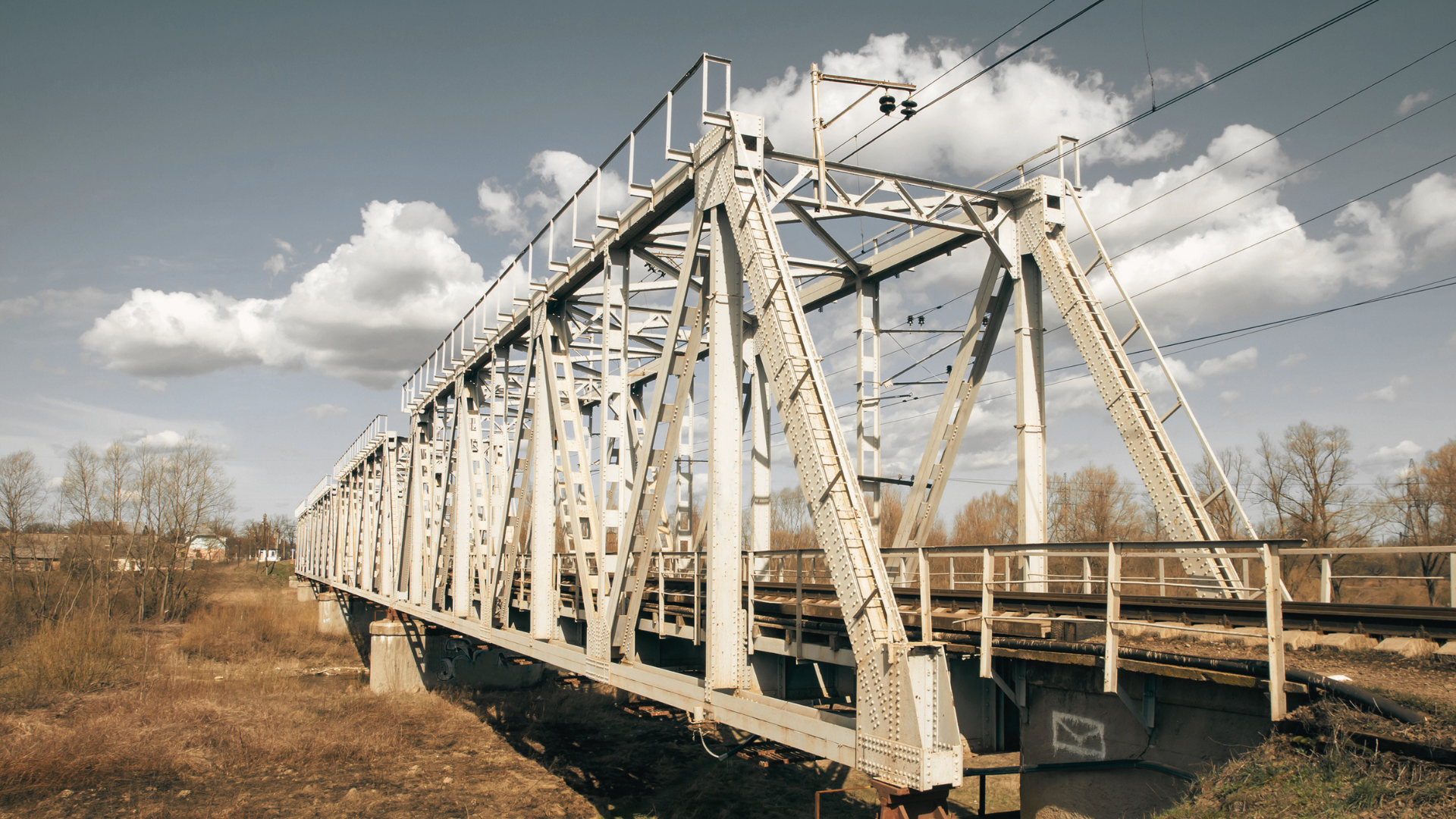
In heavy infrastructure, the Inland Rail project is set to undertake a 96-hour closure of the Sydney to Melbourne rail line from 2 to 5 May 2026, enabling critical upgrades to the Murray River bridge in the Riverina, including replacement of the final two top chords and installation of new walkways and refuge bays [5]. The closure illustrates the scale of coordination required for nationally significant infrastructure works and the temporary freight logistics disruptions that accompany them [5].
At Snowy 2.0, contractor Michels Trenchless has deployed horizontal directional drilling technology to install water and utility lines through the ecologically sensitive Kosciuszko National Park [10]. The use of trenchless techniques reflects the project’s approach to minimising environmental impact while delivering infrastructure through the national park [10]. Snowy 2.0 is also among the projects identified by AEMO as facing broader bottlenecks in the renewable pipeline [11].
Planning Reforms and Compliance Developments
The City of Canada Bay published a summary during the week of the state planning changes that have been progressively introduced across recent months, including the Housing Delivery Authority's power to declare projects as State Significant Development, state-led rezonings at North Strathfield and Burwood North around future Metro West stations, and the low and mid-rise housing provisions applying within 800 metres of town centres and transport hubs [6]. The council noted that 17 State Significant Development Applications collectively accounting for over 11,000 new dwellings are now in the planning system across Concord West, Rhodes, Strathfield and Five Dock, raising concerns about pressure on local roads, public transport, open space and community facilities [6]. Mayor Michael Megna noted the council is already exceeding its housing targets but called on the state government to deliver the infrastructure required to support growth [6].
At AirTrunk's SYD2 data centre in Lane Cove, noise verification reports and a Long Term Environmental Management Plan required under the facility's development consent have not been submitted to NSW Planning, with the environmental management plan now five years overdue [3]. Planning NSW's own assessment found that Phase 1 alone was operating 5 dB(A) louder than predicted for all four phases combined, exceeding the night-time noise limit at the nearest residential receiver by 11 dB(A) [3]. Fire and Rescue NSW has also confirmed it has not received a revised Fire Safety Study for the facility [3]. The findings are notable given that multiple additional hyperscale data centres are proposed within the same Lane Cove West business park [3].
Regulatory scrutiny of dewatering compliance on NSW construction projects is also intensifying, particularly for State Significant Development and State Significant Infrastructure projects, with water extraction, discharge and environmental impact requirements attracting increased attention [1]. Industry commentary published during the week noted that dewatering is still frequently treated as an operational task rather than a regulatory and environmental consideration, and that projects are being caught out by assuming exemptions rather than evidencing them [1].
Small Builder Financial Stress Continues
Reporting from Canberra, a market closely linked to the NSW construction ecosystem, documented continued financial stress among small builders, with the Master Builders Association recording a rise in insolvencies and builder collapses [9]. One builder, whose family-run firm has endured where many have not, described the conditions: “We just kept going, we had no choice... the minute you stop, there’s no food” [9]. The cascading effects of builder collapses are exacerbating housing supply shortages across the region [9].
ASIC data cited in the reporting showed that companies with fewer than 20 employees shouldered more than 95 per cent of all construction collapses, with insolvencies in the sector more than doubling between 2021 and 2025 [9]. ABS data showed new building firms had a survival rate of 43.8 per cent, and roughly four in ten ACT construction businesses operating in 2021 were wiped out within the four-year period [9]. The Master Builders Association noted that of 6,789 construction businesses in the territory, 94 entered insolvency in the year to February 2026, a rate of approximately 1.4 per cent, but acknowledged that ACT builders face severe workforce shortages, high regulatory burden, high taxes and limited land supply [9]. Builder collapses routinely left local suppliers and subcontractors with a return of zero cents in the dollar [9].
Regional Skills Shortage Met with New Training Pathway
In Eurobodalla, TAFE NSW has launched the region's first high school plumbing course under the Start your Future programme, with students from Batemans Bay, Moruya and Narooma High Schools to attend TAFE one day a week over an eight-week period covering hot and cold water services, fire services and drainage systems [7]. The construction industry accounts for 28.1 per cent of all registered businesses in the shire, compared with a NSW average of 17.1 per cent, making the local skills shortage a direct constraint on the regional economy [7]. The programme is linked to major local projects including the new Moruya Hospital and the Batemans Bay CBD redevelopment, with Mayor Mat Hatcher noting the shire will need more tradespeople to complete the pipeline of work ahead [7]. Nationally, the sector is projected to face a shortfall of 300,000 workers by 2027 [7].
Final Thoughts
The government-industry roundtable on fuel and material costs is the most formal response to the cost and supply chain pressures that have been affecting the sector in recent months [2]. The gas exploration reversal adds a new policy dimension, though any resulting production is at least a decade away [8].
The renewable energy pipeline’s combination of record project volumes and widespread delivery bottlenecks continues to shape the energy construction outlook, while Inland Rail and Snowy 2.0 are both progressing through technically demanding phases [5, 10, 11]. Planning reforms to the SSD framework, the Lane Cove data centre compliance gap and intensifying dewatering scrutiny reflect a regulatory environment that is simultaneously streamlining and tightening [1, 3, 6].
Builder insolvency pressures and regional workforce shortages remain live constraints on delivery capacity across the sector [7, 9]. The volume of approved and progressing work continues to expand, while the cost environment and regulatory
-
by Chris Edwards (24 April 2026). Why dewatering compliance must be built in from the start. https://insidewater.com.au/why-dewatering-compliance-must-be-built-in-from-the-start/
-
Build Australia (23 April 2026). NSW government, building sector join forces to tackle fuel supply scarcity. https://www.buildaustralia.com.au/news_article/nsw-government-building-sector-join-forces-to-tackle-fuel-supply-scarcity/
-
In The Cove | by Jack Kelly (28 April 2026). Government Regulators Drop the Ball as Data Centre Proposals Soar. https://inthecove.com.au/2026/04/28/lane-cove-data-centre-compliance/
-
Intentionally left blank.
-
The Border Mail | by Jodie Bruton (28 April 2026). Riverina rail blitz: 96-hour closure fast-tracks Inland Rail construction. https://www.bordermail.com.au/story/9234824/inland-rail-sydney-melbourne-line-closes-for-critical-upgrades/
-
City of Canada Bay Council (28 April 2026). Changes to State planning. https://www.canadabay.nsw.gov.au/news/changes-state-planning
-
Illawarra Mercury (28 April 2026). Bridging the gap in building and construction trades: How Eurobodalla is solving the plumbing skills shortage. https://www.illawarramercury.com.au/story/9232278/bridging-the-gap-in-building-and-construction-trades-how-eurobodalla-is-solving-the-plumbing-skills-shortage/
-
NT News | by Madeleine Bower (29 April 2026). Vast new NSW regions opened for gas drilling as government reverses exploration ban. https://www.ntnews.com.au/news/nsw/vast-new-nsw-regions-opened-for-gas-drilling-as-government-reverses-exploration-ban/news-story/0dea248bea068ea58481569ffe185852
-
Bega District News | by Ray Athwal (28 April 2026). ‘We just kept going, we had no choice’: The cost of running a construction business in Canberra. https://www.begadistrictnews.com.au/story/9228223/no-choice-canberra-small-builders-face-survival-crisis/
-
The Australian Pipeliner (27 April 2026). Getting technical at Snowy 2.0. https://www.pipeliner.com.au/getting-technical-at-snowy-2-0/
-
Renew Economy | by Giles Parkinson (26 April 2026). Wind, solar and battery projects at record high, but most stuck in funding, supply chain and other bottlenecks. https://reneweconomy.com.au/wind-solar-and-battery-projects-at-record-high-but-most-stuck-in-funding-supply-chain-and-other-bottlenecks/
The Pulse collates the latest news and opinions from third-party sources. Links, snippets or text are generated by an artificial intelligence engine. The Pulse aggregates news reports and does not claim to have copyright to the content. We have not fact-checked that content and cannot vouch for its accuracy or completeness. Nor do we endorse the opinions expressed by the authors or primary publishers. The content is provided as general information only and should not be relied on as a substitute for professional advice. You should contact the source to verify any factual content as well as taking specialist advice that takes your personal objectives and circumstances into account.
.png)
Kreisson
Produced by the team at Kreisson.
Browse Past Issues

.jpg)
Kreisson
We provide the construction industry with simple, easy to understand, solution-based legal advice.