Defects, Density and Data Centres: NSW Construction and the Gap Between Approval and Delivery
This week's NSW construction reporting kept returning to the distance between a project being approved and a project being built.
Urbis research cited by Australian Broker found that three in four apartments approved across metropolitan Sydney since 2020 have never started on site [5], and Planning Minister Paul Scully revoked State Significant Development status for five stalled proposals among them a near-1,000-apartment scheme on the former Caringbah High School site while clearing 27 others for fast-tracking [8]. The Age reported that the density now flowing through the Housing Delivery Authority is landing in established middle-ring suburbs such as Canada Bay and Burwood rather than the western fringe [11].
Building regulation and defect liability formed the week's second thread. Building Commission NSW issued a stop-work order over what it called serious structural defects at a Lake Macquarie apartment site, halting construction and blocking the issue of occupation certificates to buyers [7]. Build Australia reported that water-related defects featured in 92 per cent of a sample of building claims [2], while The Urban Developer reported that the prospect of mandatory Latent Defects Insurance in NSW had moved from a question of "if" to one of "when" [9].
Two further threads sat at larger scale. The data-centre build-out drew federal attention, with The Guardian reporting a proposed "triple lock" on energy and network costs as New South Wales alone fielded 44 projects seeking 11 gigawatts of grid capacity [3][10]; and the public-hospital programme produced developments at opposite ends of the delivery cycle with the $2 billion Bankstown Hospital starting works [1] and the Mater public-private partnership, where disputed abatement penalties have reached about $300 million [4].
Housing supply and planning
The Age reported that the city's middle-ring and inner-west suburbs are in line for the largest share of high-density housing in decades, drawing on a Herald analysis of projects declared by the Housing Delivery Authority [11]. Canada Bay recorded the largest proportional increase, with 7,129 proposed dwellings, close to 77 for every 1,000 residents ahead of Burwood on more than 63 per 1,000 [11]. The authority, set up in late 2024, lets proposals worth more than $60 million skip council assessment and instead be determined as state-significant developments [11]. Macquarie University's Kristian Ruming told the paper that rezoning around metro stations had already lifted land values, making it "likely only a very small proportion of the well-located new housing stock will ultimately be affordable" [11].
Australian Broker reported the same approval-to-delivery gap from the finance side, citing Urbis research that three in four apartments granted approval in metropolitan Sydney since 2020 have yet to begin construction [5]. Addressing the Property Council's housing summit, Minister Scully used the event to widen the Pre-Sale Finance Guarantee, targeting affordable housing, smaller schemes and regional NSW projects that have struggled to raise funding [5]. Property Council NSW executive director Katie Stevenson welcomed it as "exactly the kind of practical intervention we need right now — focused on getting projects out of the ground, not just approved", adding that "too many projects have planning approval but are simply not financially viable to proceed under current settings" [5].
That theme recurred when Scully revoked State Significant Development declarations for five proposals which, he said, had "failed to meet timelines, or the applicant decided not to proceed" [8]. The St George & Sutherland Shire Leader reported that one covered a concept for 988 dwellings on the former Caringbah High School land, declared state-significant in July 2025 on the Housing Delivery Authority's recommendation [8]. On the same day, 10 June, the Minister cleared 27 further projects for fast-tracked assessment; the Leader reported that 373 proposals have now been declared state-significant, representing more than 124,500 potential homes, of which eight have been approved [8].
Cost and capacity ran through the summit's other coverage. The Australian Conveyancer reported Landcom chief executive Alex Wendler telling the event that planning reforms had lifted confidence and enabled dwellings "through rezonings and upzonings", but that "new bottlenecks emerge" in enabling-infrastructure approvals and contractor capacity [6]. Mirvac executive Stuart Penklis named construction costs as the leading concern, saying Sydney "had a 40 per cent increase in construction costs in high rise" over the past four to five years, and that the industry was increasingly leaning into "modern methods of construction" [6].
Building regulation, defects and liability
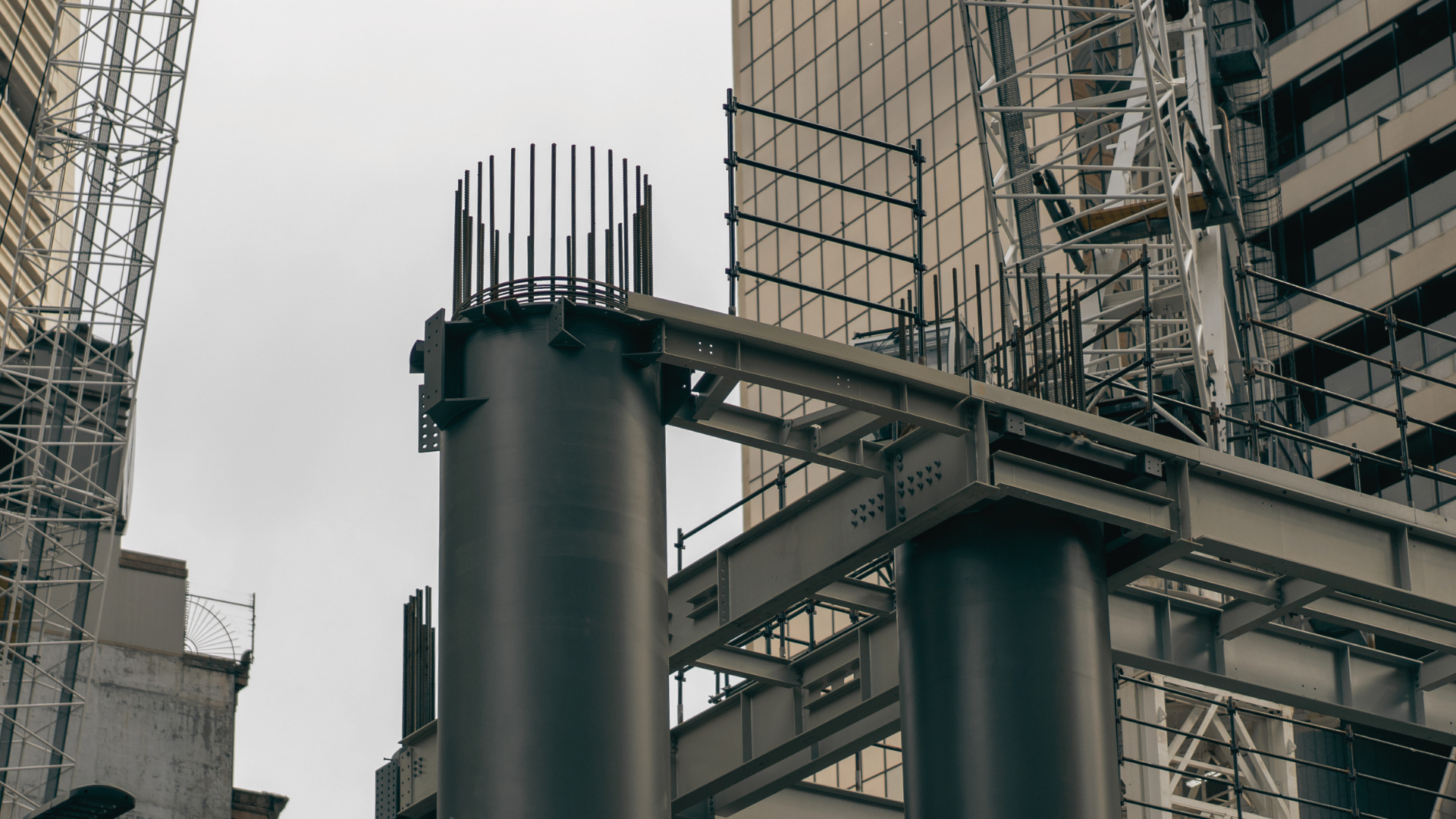
Building Commission NSW ordered an immediate halt to work at a Lake Macquarie apartment development over what it described as serious structural defects and safety risks, the Muswellbrook Chronicle reported [7]. Inspectors who attended the Mount Hutton site in January and May recorded defects and poor-quality work that put the project outside building standards, with the stop-work notice recording that "Honeycombing and exposed reinforcement were observed in the basement slab and columns, along with evidence of inadequate repairs" [7]. NSW Building Commissioner James Sherrard said continuing the work would "result in significant harm or loss to the public or occupiers or potential occupiers of the building", and a separate order blocked the issue of occupation certificates to apartment buyers [7]. The Chronicle reported that the developer behind the project had earlier become the first individual in NSW's building industry to be held personally liable for negligence under recent laws strengthening protections for home buyers and owners' corporations [7].
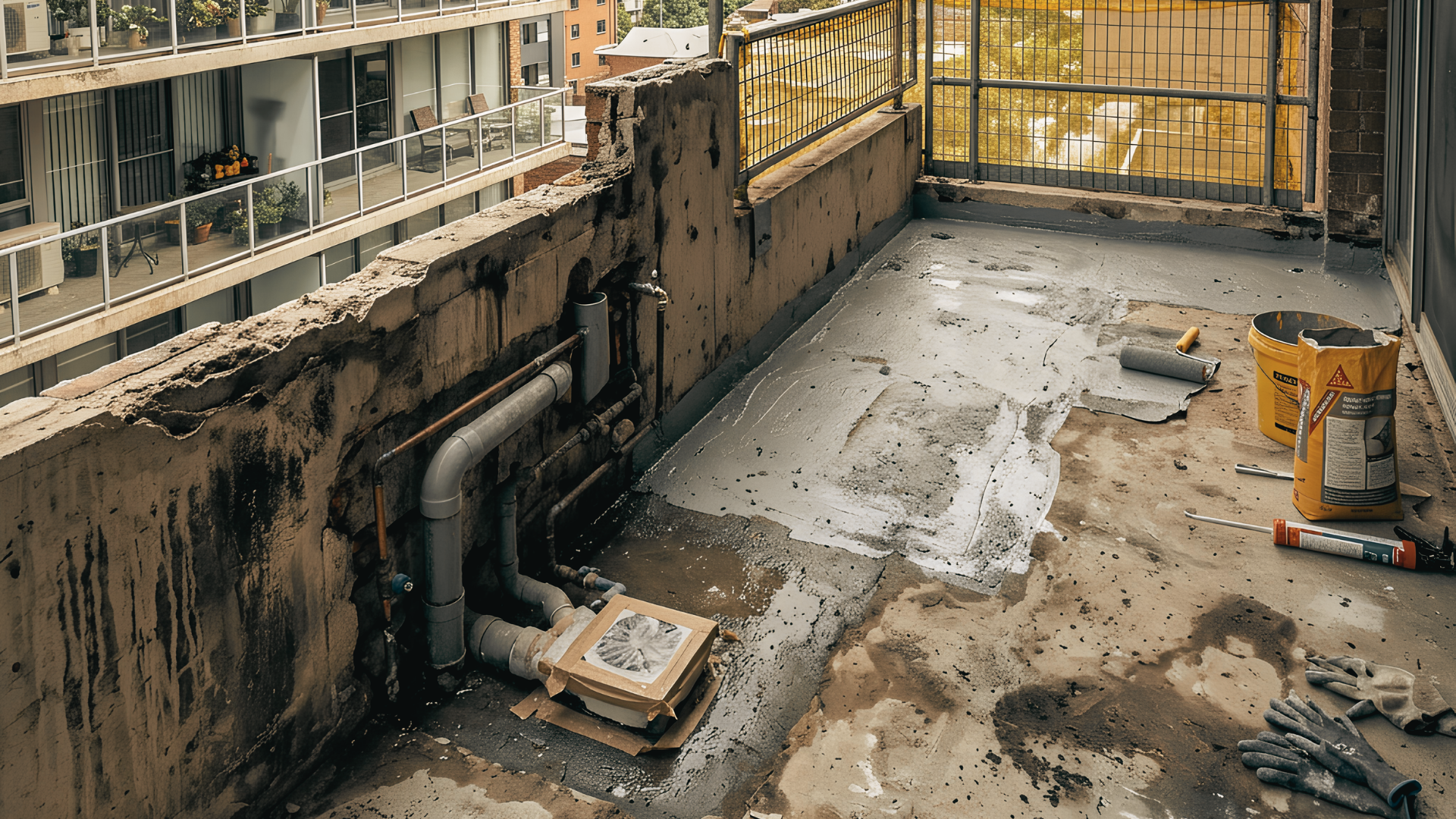
Build Australia put figures to the defect problem, reporting that water-related defects featured in 92 per cent of a sample of 2,187 claims, spanning plumbing, drainage and waterproofing [2]. It reported that a government review of serious strata defects had flagged waterproofing in roughly a fifth of the schemes examined, and pointed to revised AS/NZS 3500 plumbing standards and National Construction Code drainage provisions as tightening technical requirements [2]. The publication tied the issue to the state's housing push, noting a $12.3 million NSW commitment that it said would help deliver over 9,800 new homes, funding roads, water and sewer works through infrastructure loans [2].
On risk transfer, The Urban Developer ran a partner-content discussion of mandatory Latent Defects Insurance, reporting that the industry conversation had shifted from whether the regime would arrive to its cost, how will it compare against existing arrangements, and how to prepare [9]. Featuring Aviso Specialty's Christine Miliano and Price Forbes' Jack Richards, the piece described the cover as bringing independent inspectors on site during the build and handing buyers an assignable policy that moves post-completion risk to insurers, in contrast to the strata-bond model under which capital is locked up after completion and the developer keeps most of the risk [9]. It reported that NSW remains the focus and that timing depends on government approval [9].
Major projects and the public hospital programme
The NSW Government announced that construction had begun on the $2 billion Bankstown Hospital, which Premier Chris Minns called "the largest investment ever made in a hospital in NSW history" [1]. The release said demolition and an interior strip-out were under way, with site-remediation work set to run across 2026, ahead of a new 14-storey hospital tower and a 10-storey car park [1]. It said the State Significant Development application for the main works went on public exhibition in April and was being assessed by the Department of Planning, Housing and Infrastructure, with main-works construction expected to begin in 2027 once the design is finalised and a head contractor engaged [1]. The Government said the project sits within a hospital-building program exceeding $12 billion across NSW and, on its estimate, would support around 3,600 direct jobs [1].
At the other end of the delivery cycle, the Maitland Mercury reported that financial penalties under the Mater public-private partnership had climbed to about $300 million [4]. Novacare director Victoria Rigg told the third sitting of the parliamentary inquiry examining mould and maintenance failures at the Mater that the abatements were "close to $300 million", a figure NSW Health confirmed, while an internal NSW Health document described them as fines for "non-compliance with their obligations under the contract", penalties Novacare disputes [4]. The Mercury reported that NSW Health Infrastructure had withheld only $3.7 million so the operator could keep trading, and that Novacare had offered to sell the private arm of the partnership to the Government for $2 as it faced possible voluntary administration, an offer NSW Health rejected [4]. The hospital operates under a partnership between Novacare and the Health Administration Corporation within NSW Health [4].
Data centres and the AI energy build-out
The Guardian reported that Andrew Charlton, the assistant minister responsible for the digital economy, used a Sydney Institute address to signal that the Government would set the terms for data-centre and AI growth, telling the audience New South Wales alone had 44 projects in its pipeline seeking 11 gigawatts of grid capacity [3]. Mr. Charlton set out a proposed "triple lock" under which data centres would add new renewable generation to cover their load, meet their full share of network costs rather than shift them onto consumers, and stay flexible on demand to help stabilise the grid [3]. The Guardian reported that Datacentres Australia chief executive Belinda Dennett said operators were already covering about 70 per cent of their power use voluntarily, while independent MP Kate Chaney said "a set of loose non-binding expectations can hardly be called a 'triple lock'" because the rules are not legislated [3]. It reported the proposed rules would be settled by the country's energy ministers, who are due to meet again in July [3].
nine.com.au reported that Australia already hosts more than 160 data-centre facilities, with close to 100 further hubs planned or under development and most clustered around Sydney and Melbourne [10]. It reported that New South Wales has 15 confirmed projects, the majority near western Sydney, and that a 504-megawatt CDC campus approved at Marsden Park which was green-lit by the NSW Government in November at a reported $3.1 billion is on track to be the largest in the Southern Hemisphere, with Stockland separately flagging the conversion of a Marsden Park logistics warehouse into a 250-megawatt facility [10]. Citing a Climate Council report, nine.com.au reported that data-centre demand could lift NSW power prices by as much as 26 per cent by 2035 and that the sector's water use could reach up to 17 gigalitres over five years [10].
Final Thoughts
The clearest pattern across the week's coverage was a sector focused less on winning approvals than on turning them into completed buildings. The stalled-pipeline figures reported by Australian Broker, the State Significant Development declarations revoked for missed timelines reported by the St George & Sutherland Shire Leader, and the cost and infrastructure-sequencing constraints described at the Property Council summit pointed the same way that the binding constraint reported this week sat at delivery and feasibility rather than at planning consent [5][8][6]. The start of works on the $2 billion Bankstown Hospital and the density now directed into established middle-ring suburbs were reported alongside that as the activity actually moving [1][11].
A second pattern ran through the regulation and infrastructure-load reporting. The stop-work order reported by the Muswellbrook Chronicle, the defect-claims data reported by Build Australia, and the renewed Latent Defects Insurance discussion were each framed around quality, compliance and who carries post-completion risk in residential work [7][2][9]. The data-centre coverage and the Mater public-private partnership inquiry sat at a different scale but on a related axis, the energy and network conditions attached to new data-centre load, and the contract-administration and maintenance obligations exposed in the Mater abatement dispute, were both reported as questions of who bears cost and risk once a project is built and operating [3][10][4].
-
NSW Government (10 June 2026). Construction commences on the $2 billion Bankstown Hospital. https://www.nsw.gov.au/ministerial-releases/construction-commences-on-2-billion-bankstown-hospital
-
Build Australia (11 June 2026). Water defects drive 92% of building claims as regional housing ramps up. https://buildaustralia.com.au/trending/water-defects-drive-92-of-building-claims-as-regional-housing-ramps-up
-
The Guardian (11 June 2026). Labor to set terms for datacentre and AI growth as it vows not to repeat mistakes of resources boom. https://www.theguardian.com/australia-news/2026/jun/11/datacentre-ai-growth-economy-resources-australia-labor-government
-
The Maitland Mercury (11 June 2026). Mater PPP financial penalties blow out to an eye-watering $300 million. https://www.maitlandmercury.com.au/story/9290621/mater-inquiry-hears-of-300m-dispute-with-novacare-and-nsw-health
-
Australian Broker (12 June 2026). Approved but unbuilt: NSW targets its stalled apartment pipeline. https://www.brokernews.com.au/news/breaking-news/approved-but-unbuilt-nsw-targets-its-stalled-apartment-pipeline-289501.aspx
-
Australian Conveyancer (12 June 2026). Construction costs remain big burden facing housing delivery. https://www.australianconveyancer.com.au/article/construction-costs-remain-big-burden-facing-housing-delivery
-
Muswellbrook Chronicle (12 June 2026). ‘Serious defects’: regulator orders tools down for rogue building operator Daniel Roberts. https://www.muswellbrookchronicle.com.au/story/9285486/daniel-roberts-mount-hutton-site-faces-urgent-stop-work-order
-
St George & Sutherland Shire Leader (14 June 2026). Minister cancels fast-track status for 1000-unit Caringbah project. https://www.theleader.com.au/story/9289364/paul-scully-revokes-caringbah-1000-apartment-ssd-approval
-
The Urban Developer (15 June 2026). Latent Defects Insurance: What Developers Need to Know Now. https://www.theurbandeveloper.com/articles/mandatory-latent-defects-insurance-how-to-prepare
-
nine.com.au (16 June 2026). Map exposes Australia's bold plan to become the data centre capital of the world. https://www.nine.com.au/australia-news/map-exposes-australia-s-bold-plan-to-become-the-data-centre-capital-of-the-world-20260615-p606xw.html
-
The Age (16 June 2026). The Sydney suburbs bracing for population boom as reforms reshape housing map. https://www.theage.com.au/national/nsw/the-sydney-suburbs-bracing-for-population-boom-as-reforms-reshape-housing-map-20260610-p605hu.html
The Pulse collates the latest news and opinions from third-party sources. Links, snippets or text are generated by an artificial intelligence engine. The Pulse aggregates news reports and does not claim to have copyright to the content. We have not fact-checked that content and cannot vouch for its accuracy or completeness. Nor do we endorse the opinions expressed by the authors or primary publishers. The content is provided as general information only and should not be relied on as a substitute for professional advice. You should contact the source to verify any factual content as well as taking specialist advice that takes your personal objectives and circumstances into account.
.png)
Kreisson
Produced by the team at Kreisson.
Browse Past Issues

.jpg)
Kreisson
We provide the construction industry with simple, easy to understand, solution-based legal advice.