Land, Homes and the Cloud: NSW Loosens the Rules as the Data Centre Race Heats Up
This week's reporting centres on the settings that decide where NSW can build and what it costs to do so.
The NSW Government placed simpler industrial land planning controls on public exhibition alongside a draft categorisation of industrial land for Regional NSW together with the Central Coast and Lower Hunter, with indicative supply targets of 50 hectares a year for the Central Coast and Lower Hunter and 40 hectares a year for the regions [2]; Cement Concrete & Aggregates Australia backed the proposals and renewed its call for a Heavy Construction Materials Plan [1]; and the Housing Industry Association reported that low rise apartment projects of more than two units no longer need Home Building Compensation Fund cover under amendments published on 30 October [4]. Both industrial land exhibitions close at 5pm on Thursday 26 November 2026 [2].
On the delivery side, the coverage follows projects and markets moving from approval into construction. A national forecast from Data Centres Australia and DC Byte projects 3.9GW of operating capacity by 2030 and places Melbourne ahead of Sydney on total forecast pipeline [5]; coNEXA is spending $250 million to bring recycled water to NEXTDC's S4 Sydney campus at Horsley Park [3]; and the 350MW Sundown solar and battery development in the New England REZ now holds federal environmental approval [9]. Landcom's nine MMC terraces at Schofields are finished [10], the first Western Harbour Tunnel boring machine is nearing the midpoint of its harbour crossing [8], and the Government is seeking a developer for the Bradfield Enterprise Precinct [7], while The Good Builder sets out when NSW extension of time notices for October's rain fall due [6].
Industrial Land Rules Go on Exhibition as Low Rise Apartments Shed the HBCF Requirement
The NSW Government has released proposed changes to the planning controls for industrial land for public comment, presenting them as a simpler and more flexible set of rules intended to support investment and employment [2]. According to the 29 October release, the changes would give businesses more scope to set up and run industrial and employment uses, with distribution centres, warehouses over several storeys and facilities for online retail, freight and logistics among the examples given [2]. The Government records that its Statewide Policy for Industrial Lands, the first action in the Industrial Lands Action Plan, was finalised in August, and states that this exhibition closes out every remaining action in that Plan [2]. The Department of Planning, Housing and Infrastructure is running a separate set of minor amendments responding to stakeholder feedback, which the release anticipates will apply before the year ends [2].
Exhibited alongside those changes is a proposed categorisation of industrial land for Regional NSW, the Central Coast and the Lower Hunter, which the Government says assesses each area by its economic contribution, scale, function and infrastructure links [2]. Land would be classed as state, regionally or locally significant, steering planning decisions toward locations able to meet future demand [2]. Indicative targets call for 50 hectares a year of development ready industrial land in the Central Coast and Lower Hunter and 40 hectares a year in Regional NSW, with nominated Investigation Areas to test where more land could be released [2]. Both exhibitions close at 5pm on Thursday 26 November 2026 [2]. Planning Minister Paul Scully said "Fairer, clearer, simpler rules cut red tape, back business investment and lift productivity" [2].
Cement Concrete & Aggregates Australia welcomed the proposals, with Chief Executive Officer Michael Kilgariff calling them a positive step toward better coordinated planning for industrial land [1]. Referring to facilities such as concrete batching plants, Mr Kilgariff said these "need to operate close to construction sites, and protecting them from incompatible development is essential to maintaining efficient, affordable material supply" [1]. He also singled out extractive industries, observing that "Quarries are constrained by the location of suitable resources and cannot simply relocate when access is lost" [1]. CCAA wants the reforms to form part of a broader planning approach that includes a dedicated Heavy Construction Materials Plan, and says it will work with the Government as the proposals advance [1].
In a separate change, the Housing Industry Association reported that amendments published by the NSW Government on 30 October remove the requirement for Home Building Compensation Fund insurance on low rise Class 2 apartment projects containing more than two residential units [4]. HIA states that buyers in those projects will instead receive the protections that apply to purchasers in bigger apartment schemes, among them the Strata Building Bond [4]. HIA NSW Executive Director Brad Armitage said the insurance requirement "added significantly to the project cost and was a massive handbrake on these types of developments" [4]. He said the amendments "will instantly make developments more feasible, whilst still ensuring consumers are adequately protected", and described them as "a great start" toward a wider overhaul of the HBCF system [4].
A National Forecast Charts the Data Centre Pipeline as S4 Sydney Lines Up Recycled Water
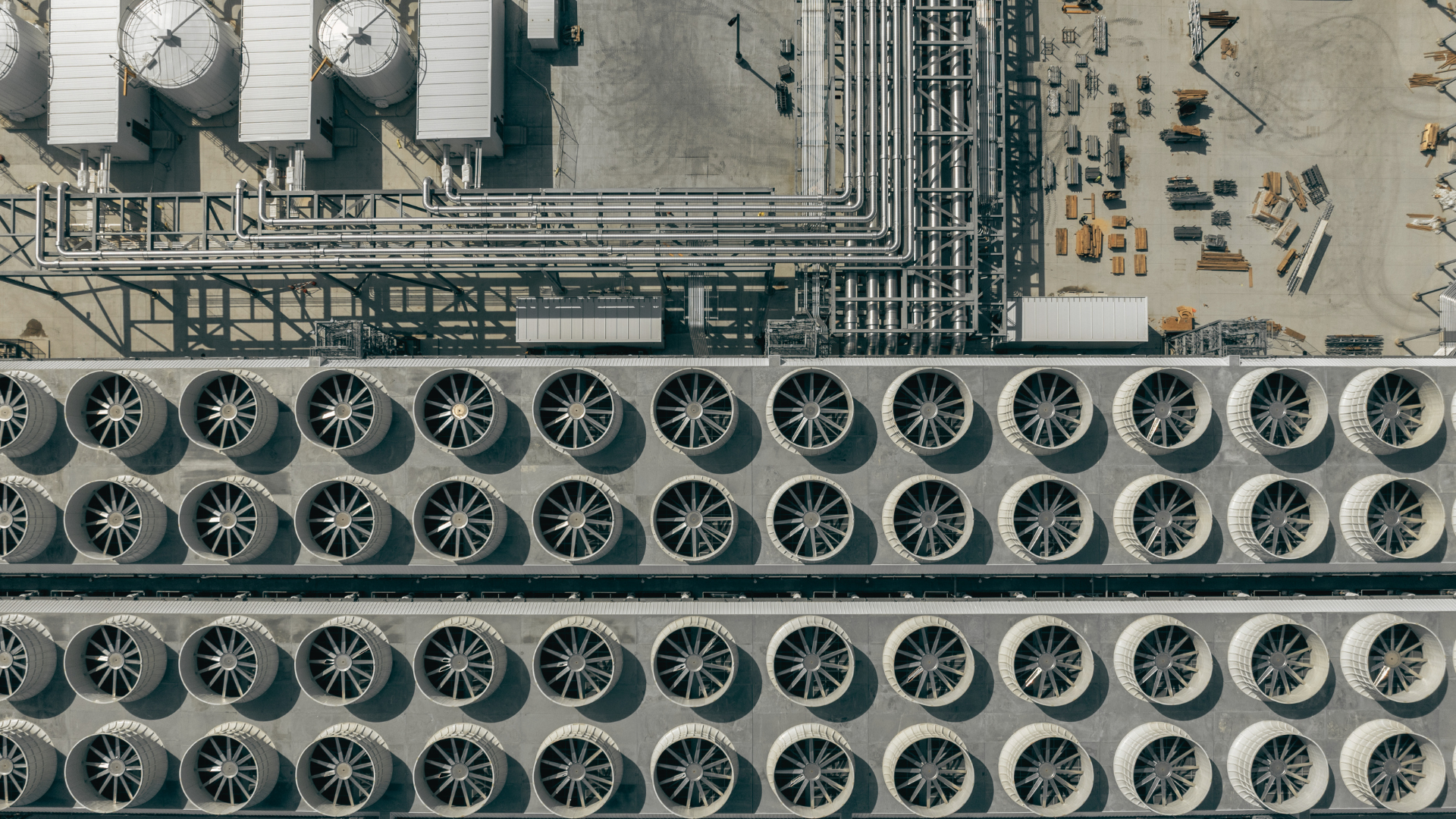
TelcoNews reports that the second edition of the Australian Data Centre Forecast Report, released by Data Centres Australia and prepared with DC Byte, projects operating capacity nationally of 3.9GW by 2030 [5]. The study counts 1.6GW now operating across the 163 facilities it tracks, and says the forecast has grown by 5.2GW since April [5]. Capacity under construction has doubled on the previous period, with Sydney and Melbourne each holding half of it, while 1.2GW moved into the committed category in Melbourne compared with 0.7GW in Sydney [5]. The report connects that gap to approval settings, comparing the Victorian Government's Development Facilitation Program with the NSW State Significant Development process [5]. Beyond the two main hubs, the portion of the forecast pipeline located elsewhere in Australia has risen from 19 per cent to 31 per cent in two years [5].
For Sydney, the report records a 3.6GW fall in total forecast pipeline and a 4.4GW reduction in early-stage capacity, which it attributes to a likely mix of energy constraints, less certain approval timeframes and recent NSW policy announcements [5]. Melbourne's pipeline grew by 1.7GW over the same period, only 0.3GW of it early-stage, a result the report reads as existing schemes advancing through development rather than a wave of new sites [5]. TelcoNews notes the report's view that policy settings are becoming a major point of difference between the states, and that later editions may capture the effect of more recent policy changes [5]. The report ties the 2030 projection to cloud and AI computing demand, while naming capital availability, energy access and national AI infrastructure standards among the factors shaping supply [5].
In Western Sydney, Techpartner.news reports that coNEXA, a South Australian infrastructure investor, is expanding its AquaNet network at a cost of $250 million so it can deliver as much as 16 million litres of recycled water daily to NEXTDC's S4 Sydney facility in Horsley Park [3]. The water will come from the company's Fairfield plant, the Independent Pricing and Regulatory Tribunal has approved the project, and private capital meets its full cost [3]. The 29 October report places the start of construction in the following month and first water flow in late 2027 [3]. NEXTDC designs S4 Sydney for up to 365MW of IT capacity [3]. NSW Minister for Water Rose Jackson said "This is exactly the type of project we envisioned when we released the NSW Data Centre Guidelines" [3].
On generation, Renew Economy reports that Recurrent Energy, a subsidiary of Canadian Solar, has secured federal approval for its Sundown solar and battery project under the Environment Protection and Biodiversity Conservation Act 1999 (Cth) [9]. The project, at Spring Mountain within the New England REZ and around 30 kilometres east of Inverell, combines 350MW of solar with a 150MW, four-hour battery, and gained its state development consent from the Independent Planning Commission in August [9]. According to the report, the federal approval was signed on 23 October and runs to the end of 2066; it obliges Recurrent to purchase and retire biodiversity offsets, and to publish online a biodiversity management plan that the NSW Planning Secretary has approved [9]. This newsletter reported the exhibition of the environmental impact statement for the New England REZ network infrastructure project in its edition of 22 October 2026.
Landcom's MMC Terraces Are Complete as a Harbour Tunnel Machine Nears Halfway
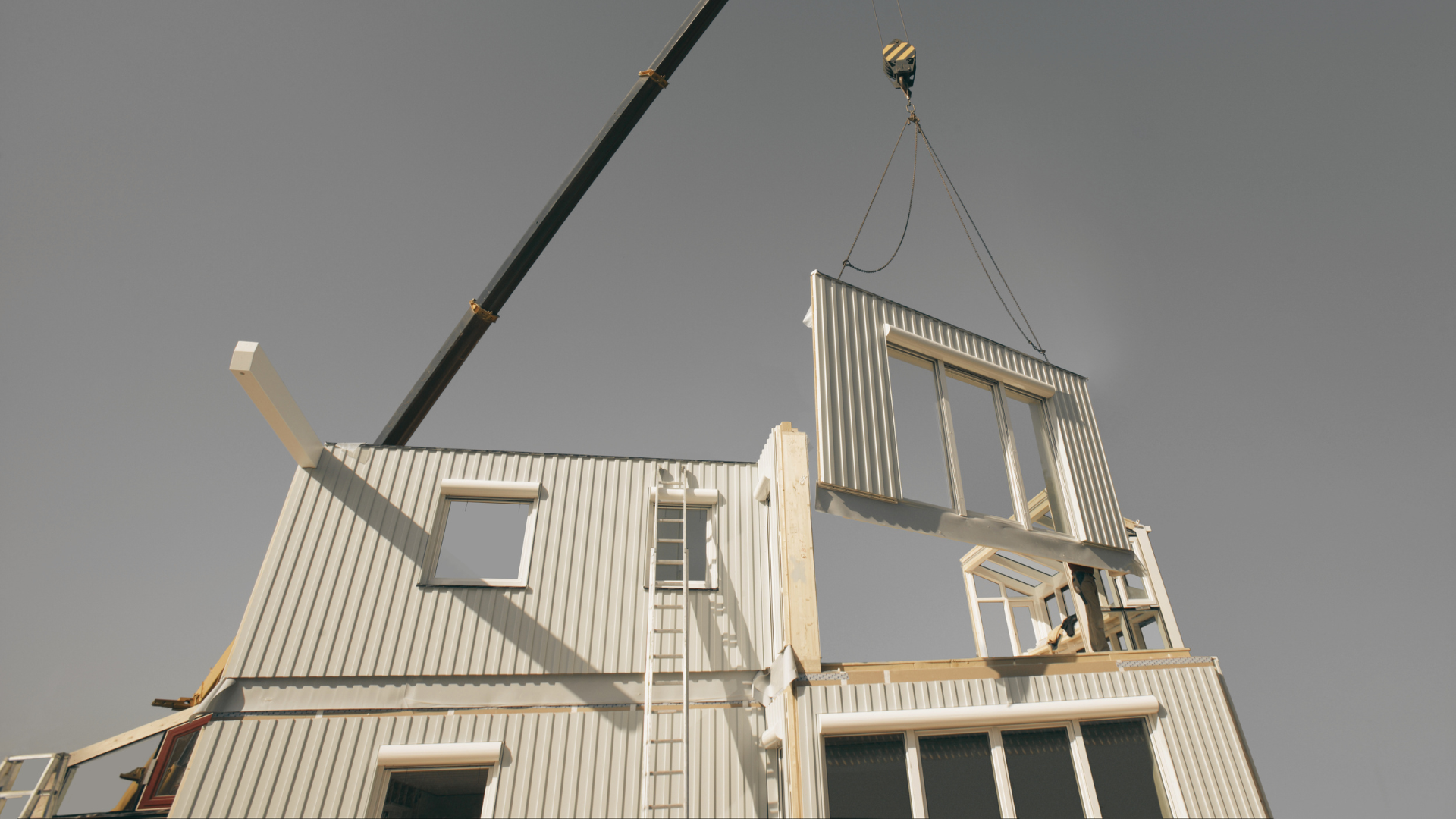
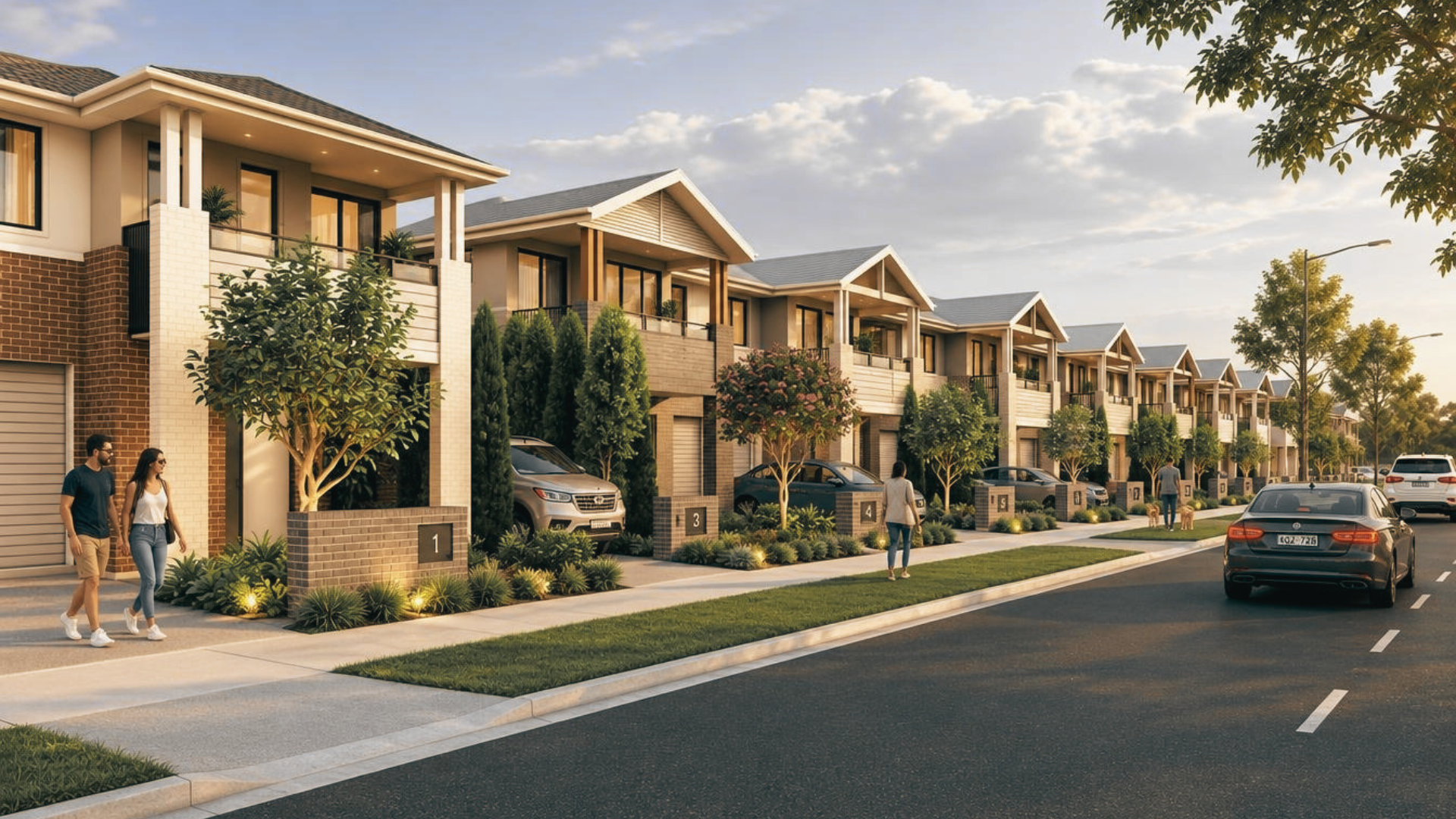
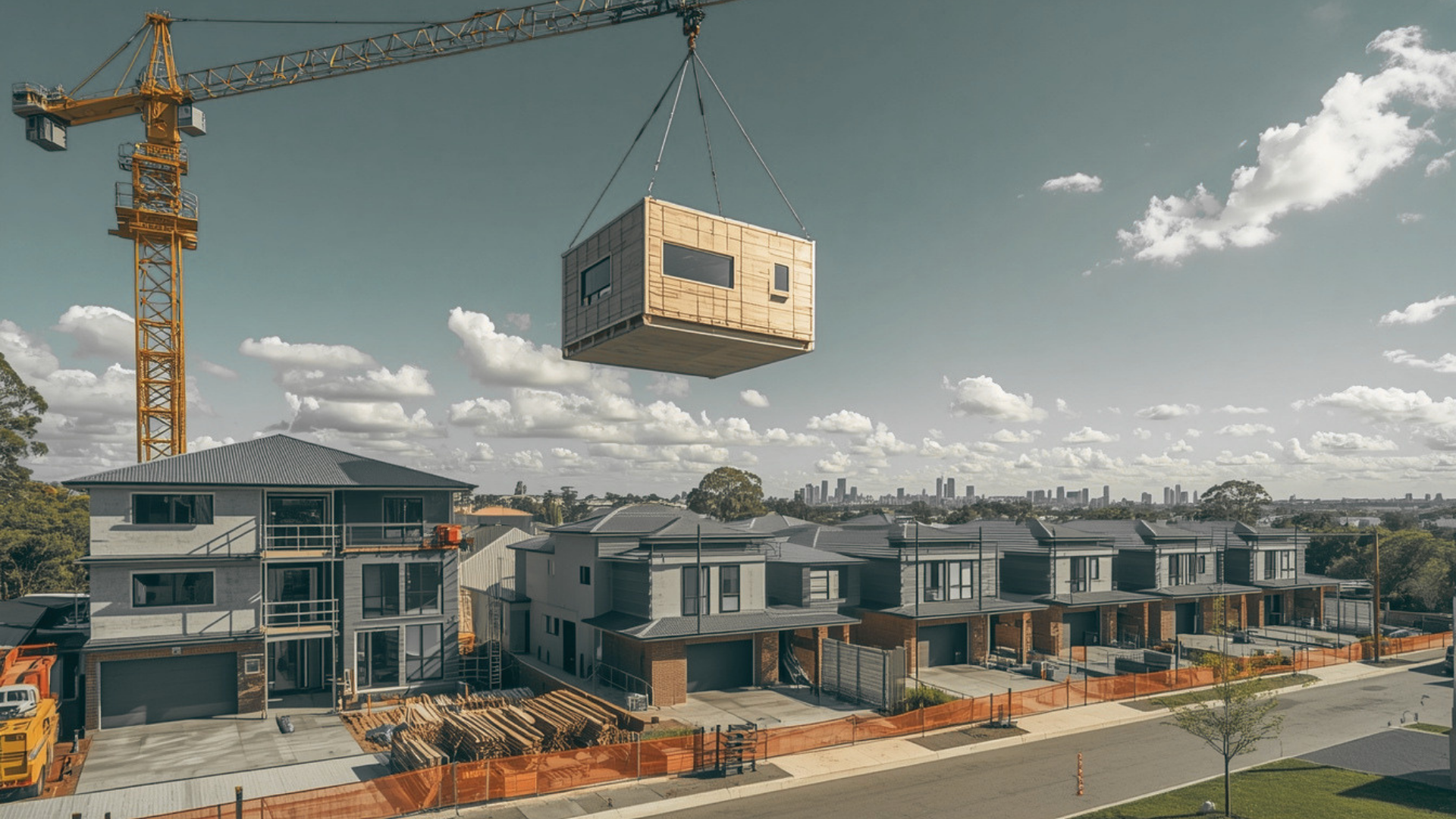
A NSW Government release published by Mirage News reports that nine terraces delivered through modern methods of construction at Landcom's Schofields development, in Sydney's north-west, are complete [10]. Much of each two-storey, three-bedroom home was fabricated off site and craned into place, and the release puts the build at about eight months against 12 to 14 months for a comparable conventional home [10]. Four terraces go on sale in November and the remainder in early 2027, within a Landcom development of around 140 homes [10]. A second pilot at Edmondson Park, covering 33 dwellings, is before Liverpool Council as a development application [10]. The release also cites the Building (Approvals and Practitioners) Act 2026, which it says will formally recognise prefabricated buildings and bring them into the building approvals system [10]. This newsletter reported the Building Bill becoming an Act in its edition of 20 August 2026.
At Bradfield, The Urban Developer reports that the NSW Government is seeking a developer for the Enterprise Precinct, offering 6.7ha with a further 7ha that could be released once the first stage is delivered [7]. The four-lot site adjoins the Advanced Manufacturing Readiness Facility, whose second building is due in 2028 to accommodate Australia's first semiconductor packaging facility, and is expected to be development ready from early 2029 [7]. The precinct is intended for occupiers ranging from large corporates to startups, researchers and education providers, working in fields that include aerospace, superconductors, logistics and defence [7]. Knight Frank is acting for the State, and expressions of interest close on 11 December 2026 [7]. NSW Planning Minister Paul Scully said "The strong response from prospective businesses shows there is real demand from advanced industries to establish and grow in Bradfield City" [7].
Beneath the harbour, Build Australia reported on 3 November that the first of the Western Harbour Tunnel's two boring machines was due to pass the midpoint of its drive from Birchgrove to Waverton that week, and that crews under Waverton have finished two underground receiving chambers [8]. Measuring up to 34 metres long, 35 metres wide and 23 metres high, the chambers were excavated with roadheaders so the machines can be taken apart underground, their cutterheads and shields left sealed permanently in the rock [8]. The machines are boring the last 1.5 kilometres under the harbour, as deep as 50 metres, to join the 2.8 kilometres already excavated between Cammeray and Waverton [8]. Minister for Roads Jenny Aitchison said the project "is taking shape deep beneath Sydney harbour", and the publication reports that it is on schedule to finish in 2028 [8].
The Good Builder reports that Sydney's Observatory Hill gauge logged 149.2 mm of October rain by 9am on the 27th, close to three times the 55.4 mm median [6]. It notes that clause 7 of the NSW Government's standard form for home building work over $20,000 treats inclement weather, and conditions flowing from it, as grounds for a reasonable extension [6]. The builder must give written notice, stating the cause and estimated length, within 10 business days of the event, and if the owner lodges no written dispute in the following 10 business days the extension takes effect [6]. Counting from the 10.4 mm fall to 9am on 23 October, the publication
Final Thoughts
Two patterns run through the week's coverage. The first is attention to the settings beneath delivery: proposals to classify industrial land, set regional supply targets and streamline approval pathways for industrial and employment uses, alongside an insurance requirement lifted for smaller apartment projects, with industry bodies from heavy materials to home building describing the changes in terms of feasibility and cost [1, 2, 4]. Market reporting in the same week linked the shift of data centre capacity between Sydney and Melbourne to approval timing and policy signals [5]. The composition of that reporting was consistent with planning and regulatory settings being treated as a lever on project feasibility rather than as a fixed backdrop.
The second pattern is delivery reported as a sequence of steps. A completed MMC pilot sat alongside a second application already lodged [10]; a precinct went to market with a further release tied to its first stage [7]; a recycled water connection was described from regulatory approval through construction to first flow [3]; federal approval for Sundown followed its state consent [9]; and tunnelling approached its midpoint with receiving chambers ready [8]. Wet weather coverage concentrated on when notice windows open and close rather than on the rainfall itself [6]. Taken together, the reporting was consistent with programmes being described in staged increments rather than as single announcements.
-
Cement Concrete & Aggregates Australia (29 October 2026). CCAA Welcomes NSW Reforms to Strengthen Industrial Land Protections. https://newshub.medianet.com.au/2026/10/ccaa-welcomes-nsw-reforms-to-strengthen-industrial-land-protections/179157/
-
NSW Government (29 October 2026). Minns Labor Government delivers simpler planning rules to power industrial growth. https://www.nsw.gov.au/ministerial-releases/simpler-planning-proposed-industrial-land
-
Techpartner.news | by Staff Writer (29 October 2026). coNEXA to supply recycled water to NEXTDC's S4 Sydney in $250m project. https://techpartner.news/news/conexa-to-supply-recycled-water-to-nextdcs-s4-sydney-in-250m-project-629992
-
Housing Industry Association (30 October 2026). HBCF Insurance changes for apartment projects is great news for feasibility. https://hia.com.au/our-industry/newsroom/industry-policy/2026/10/hbcf-insurance-changes-for-apartment-projects-is-great-news-for-feasibility
-
TelcoNews Australia | by Mara Sugue (30 October 2026). Melbourne overtakes Sydney in Australia data centre boom. https://telconews.com.au/story/melbourne-overtakes-sydney-in-australia-data-centre-boom
-
The Good Builder | by TGB Editorial (2 November 2026). Queensland and NSW Start the EOT Clock at Different Points After a Wet October. https://thegoodbuilder.com.au/qld-nsw-eot-clock-wet-october
-
The Urban Developer | by Harrison Caithness (2 November 2026). NSW Courts Developer for 6.7ha Bradfield CBD Industrial Superlot. https://www.theurbandeveloper.com/articles/nsw-courts-developer-for-6-7ha-bradfield-cbd-industrial-superlot
-
Build Australia (3 November 2026). Western Harbour Tunnel reaches milestone as tunnel boring machines near halfway point. https://buildaustralia.com.au/projects/western-harbour-tunnel-reaches-milestone-as-tunnel-boring-machines-near-halfway-point
-
Renew Economy | by Peter Hannam (3 November 2026). Big solar and battery project gets federal green tick for contested REZ, with conditions. https://reneweconomy.com.au/new-england-big-solar-and-battery-project-gets-federal-green-tick-with-some-conditions
-
Mirage News (4 November 2026). Minns Labor Backs Modern Construction to Build Homes Faster. https://www.miragenews.com/minns-labor-backs-modern-construction-to-build-1771436/
The Pulse collates the latest news and opinions from third-party sources. Links, snippets or text are generated by an artificial intelligence engine. The Pulse aggregates news reports and does not claim to have copyright to the content. We have not fact-checked that content and cannot vouch for its accuracy or completeness. Nor do we endorse the opinions expressed by the authors or primary publishers. The content is provided as general information only and should not be relied on as a substitute for professional advice. You should contact the source to verify any factual content as well as taking specialist advice that takes your personal objectives and circumstances into account.

Kreisson
Produced by the team at Kreisson.
Browse Past Issues

Kreisson
We provide the construction industry with simple, easy to understand, solution-based legal advice.